The Pashmina Guide
Pashmina, explained properly
History, craft, and the honest differences between pashmina, cashmere, merino, synthetic "pashmina-style" goods, and shahtoosh, the banned fibre most guides leave out entirely. Written as a reference. Nothing on this page is trying to sell you anything, which is rarer than it should be.
What pashmina actually is
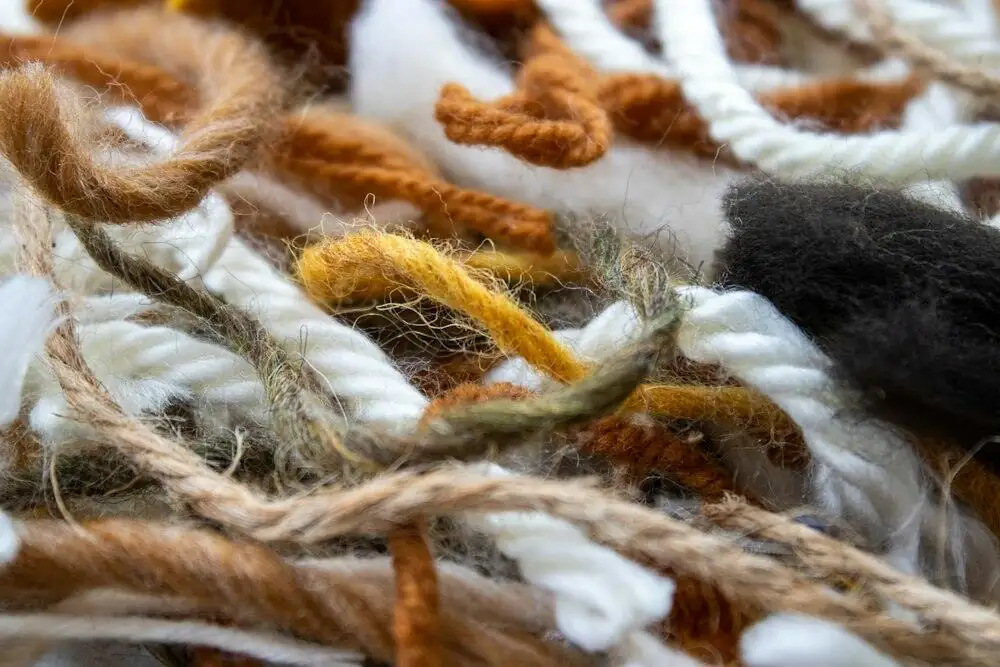
"Pashmina" starts as a word, not a marketing term: it comes from the Persian pashm, meaning wool, and specifically refers to the fine undercoat hand-combed, never shorn or shaved, from Changthangi goats each spring, high on the Changthang plateau where the cold forces them to grow it. That fibre is then hand-spun and handwoven into cloth in Kashmir. Pashmina, properly used, names both the fibre and the finished, hand-made textile, not a texture or a price point.

Cashmere is the English rendering of the same place name, "Kashmir", and in global trade today it has drifted into a broad category term for goat-fibre wool generally, regardless of which goat, how it was collected, or whether a human hand touched the spinning wheel or the loom. That's the entire source of the confusion: two words that once pointed at the same valley now mean very different things. Under Kashmir's GI law, only wool that is combed, hand-spun and handwoven inside the recognised region may legally be sold as "Kashmir Pashmina." Everything else, mass-market cashmere, merino, and synthetic "pashmina-style" blends, is a different product wearing a borrowed name, whatever the label says.
One page can't replace a certificate. Every Lucr piece states its exact fibre content and ships with a numbered certificate of authenticity, see how we test, below, and the full FAQ for ordering specifics.
A history longer than "luxury"
Pashmina was a court textile and a diplomatic gift centuries before it was a fashion category. The version of the story that starts with a European boutique leaves out most of it.
On the high plateau
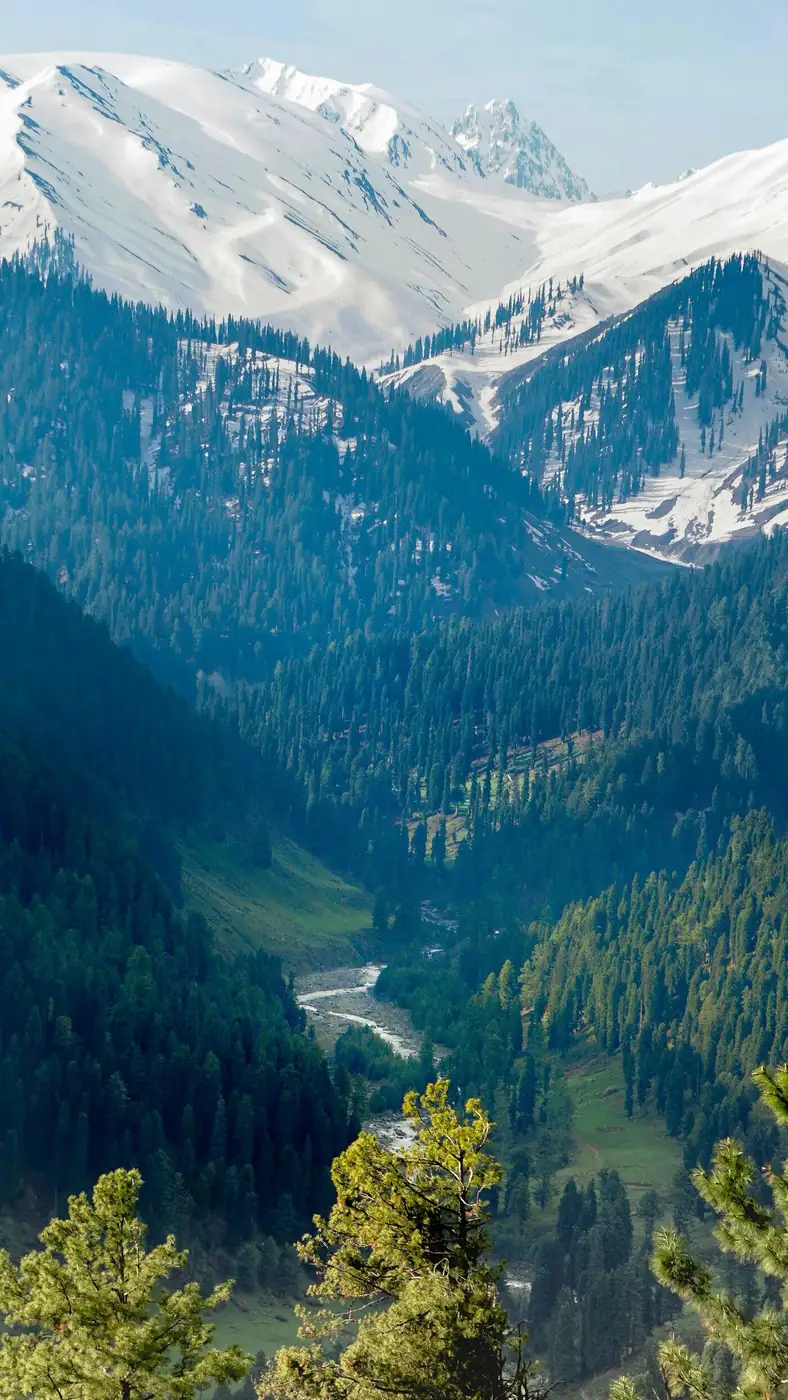
Changthangi goats have grown this fine undercoat in the cold of the Changthang plateau, spanning Ladakh and western Tibet, for millennia. Some accounts place fibre and weaving traditions in the wider Kashmir region as early as the 3rd century BCE, though the shawl-weaving industry as continuously documented dates from around the 11th century, becoming a luxury good by the 13th.
A court industry takes shape
Sultan Zain-ul-Abidin is widely credited with formalising Kashmir's shawl workshops under royal patronage, turning a regional craft into an organised trade with recognised workshops and techniques.
The Mughal court, and the jamawar
When the Mughal emperor Akbar brought Kashmir under his rule in 1586, he ordered shawls woven long enough to wrap the full body, the jamawar. Shawls entered the khil’at tradition, the robes of honour gifted to courtiers as formal recognition of rank and service. Under Shah Jahan, the very finest shawls, woven from shahtoosh, not pashmina, were reserved for royalty alone; nobles below that rank received pashmina instead. The two fibres were already status-ranked centuries before either reached Europe.
Named for somewhere else
European demand carried Kashmiri shawls to Paris, London and beyond. The teardrop-shaped buta motif, built into the cloth by kani weavers rather than printed on afterward, became so sought-after that mills in Paisley, Scotland began mass-producing cheap printed imitations of it, close enough, and made in such volume, that the motif kept the Scottish mill town's name. “Paisley” is a Kashmiri pattern wearing someone else's label.
The European craze
British and French officials returning from India carried shawls home from the late 1700s. Empress Joséphine, who reportedly dismissed the shawl at first, went on to own several hundred; Queen Victoria's later patronage cemented it as a marker of taste. In the process, a textile that had signalled rank for Mughal courtiers, largely men, was recast in the West as a womenswear luxury.
Imitation, decline, and a stretched name
Cheaper shawls from Punjab and European mills displaced much of the genuine trade by the late 19th century. Partition and decades of conflict further strained Kashmir's workshops. By the 1990s, “pashmina” was being used globally as a marketing word for almost any soft scarf, regardless of fibre, which is the real origin of the confusion this page exists to untangle.
Protected, and still made by hand
Kashmir Pashmina now carries Geographical Indication (GI) status in India, authenticated through the Craft Development Institute in Srinagar. The name is legally reserved for wool that is hand-combed, hand-spun and handwoven within the recognised Kashmir region, which is the standard every piece on this site is bought against.
The 1990s marketing moment is worth sitting with: that's the decade "pashmina" stopped reliably meaning the hand-made Kashmiri textile and started meaning almost any soft shawl. GI certification, and houses that publish exactly where a piece came from, are the direct response to that stretch.
In literature & culture
By the mid-19th century, a Kashmir shawl wasn't just a garment in the English-language novel, it was shorthand a reader could decode instantly: money, taste, and often a family connection to colonial India, all folded into one object placed carefully into a scene.

In William Makepeace Thackeray's Vanity Fair (1848), Joseph Sedley returns from India with two cashmere shawls for his sister, and it's Becky Sharp's naked envy of them, not the shawls themselves, that does the real work: the fabric measures the distance between the Sedleys' colonial money and her own lack of it. Elizabeth Gaskell's North and South (1855) uses shawls the other way round, as inheritance: Margaret Hale is asked to model her aunt's collection, family wedding gifts handed down rather than bought new, while another character in the same scene is turned away from an "Indian shawl" she'd set her heart on once she learns the price. Both scenes assume the reader already knows a genuine Kashmir shawl was never the cheap option, a hundred and seventy years before we'd start saying the same thing about the honest, hand-spun kind on this page.
That literary presence had a practical side effect: it's a meaningful part of why the Paisley mills' imitation shawls needed a well-known name to borrow in the first place, see the history timeline above. A pattern doesn't get worth counterfeiting until enough novels, portraits, and drawing-room conversations have already told everyone what the real thing signals.
We've kept this section to references we could verify rather than repeat secondhand. For the fuller academic picture, look up Suzanne Daly's The Empire Inside: Indian Commodities in Victorian Domestic Novels, or the Journal of British Studies essay "Designed for Eternity: Kashmiri Shawls, Empire, and Cultures of Production and Consumption in Mid-Victorian Britain," both of which go well beyond what fits on a product-education page.
How it's made, in brief
The short version of a five-stage process that, done properly, still can't be shortened by machinery at any single step. For the full walkthrough with photographs of each stage, read The Craft; for procurement-grade detail, see The Sourcing Dossier.
| Stage | What happens | Why it resists shortcuts |
|---|---|---|
| 1. Sourcing | Pashm is combed from Changthangi goats each spring, above 12,000ft. | Combing (not shearing) protects the animal and the fibre's fineness; it happens once a year, by hand. |
| 2. Hand-spinning | Cleaned, carded pashm is spun on a yinder, a simple wooden wheel. | Pashm's staple length is too short for machine spinning, which breaks the fibre. |
| 3. Handloom weaving | Yarn is woven on a pit loom, or built with wooden toji spools for kani work. | Kani patterning has no shuttle equivalent, each colour change is placed by hand. |
| 4. Embroidery | Sozni needlework, worked from the cloth's reverse, and couched tilla metallic thread. | Density this fine, sometimes 200+ hours per piece, has no mechanical equivalent. |
| 5. Finishing | Washed, hand-pressed, and checked against the tests in this guide before it ships. | The last, and only, quality gate between the atelier and a claim of authenticity. |
Pashmina vs. cashmere vs. shahtoosh vs. merino vs. synthetic
Five things get called "pashmina" by someone trying to sell you one of them. Here's what actually separates them, fibre by fibre, not just by name.
| Compared on | Pashmina | Cashmere | Shahtoosh | Merino wool | Synthetic "pashmina-style" |
|---|---|---|---|---|---|
| Source animal | Changthangi goat | Other cashmere goats | Chiru (Tibetan antelope), wild, not farmed | Merino sheep | Petrochemical fibre, no animal |
| How it's collected | Combed alive, once a year | Combed or shorn, often machine-assisted | The chiru is killed and skinned, it cannot be combed live | Shorn alive, like sheep's wool generally | Extruded from viscose, acrylic or polyester |
| Fibre diameter | 12–14 microns | 14–19 microns | ≈ 9–12 microns, finer than pashmina | 17–24 microns | Not a natural-fibre measure |
| Legal status | Legal; GI-protected in Kashmir | Legal, unregulated fibre category | Illegal to trade in most jurisdictions, including the US | Legal, unregulated | Legal, unregulated |
| May be called "Kashmir Pashmina" | Yes, when hand-spun & handwoven in Kashmir | No | No, historically a separate, rarer textile | No | No |
Shahtoosh's finer micron count is precisely why it was historically prized above pashmina, and precisely why the trade nearly wiped out the chiru. More on that below.
Shahtoosh: not pashmina, not legal, not something we sell
No honest guide to pashmina can skip shahtoosh, because for most of this textile's history the two were sold, and ranked, side by side. They are not versions of the same thing.
Shahtoosh means "king of fine wool" in Persian, and it comes from the chiru, a wild Tibetan antelope, not a goat. Unlike Changthangi goats, chiru cannot be domesticated or combed, the only way to obtain the fibre is to kill and skin the animal. Producing even one shahtoosh shawl requires killing several wild chiru, which is the direct reason the species was driven toward extinction over the 20th century; it remains classified as threatened today, and international and Indian wildlife law now prohibit the shahtoosh trade outright, the U.S. and most other major markets ban it explicitly.
Historically, this was the fibre reserved for Mughal royalty, with pashmina given to nobles as the next tier down (see the history timeline above), so the "pashmina vs. shahtoosh" distinction is not a modern marketing invention. It's centuries old. What's changed is that one of the two is now a protected, thriving craft, and the other is a wildlife crime.
Lucr does not source, stock, or knowingly handle shahtoosh in any form. Everything on this site is pashm, combed, not killed, from Changthangi goats, and we say so plainly rather than let the word "rare" do work it shouldn't. If a seller anywhere offers you an "ultra-fine, ultra-rare" shawl at a price that implies shahtoosh, that's a legal red flag as much as an ethical one; genuine antique shahtoosh pieces exist in museums and family collections, but new trade in the fibre is not legitimate anywhere Lucr does business.
How to actually verify a piece is real
None of these tests is decisive alone. Together, they're what separates a confident buyer from someone taking a seller's word for it.
| Check | How to run it | What it tells you |
|---|---|---|
| GI tag / certificate | Ask for the piece's GI certification or numbered certificate of authenticity, issued via the Craft Development Institute, Srinagar. A genuine certificate is lot-traceable and often carries a QR code or serial number. | Confirms Kashmir origin and hand production, not fibre grade on its own. |
| Ring test | Gather a plain-weave, unembroidered piece and try to pass it through a ring. Hand-spun yarn is fine enough that it often will. | Supporting evidence only, fails honestly on heavier weaves or dense embroidery, so a "fail" doesn't necessarily mean fake. |
| Burn test | On a stray thread only (this is destructive): pashmina singes, curls, and smells like burnt hair, leaving a soft crumbling ash. Synthetic fibre melts, beads, and smells of plastic. | Reliable, but only runnable on loose fringe, not something to try on a finished retail piece in-store. |
| Weave irregularity | Look closely at the weave under good light. Handloom cloth shows slight, human irregularity from row to row; power-loom cloth is mechanically uniform. | A genuine tell, but takes a little practice to read confidently. |
| Listing language | Read how the fibre is described. Specific claims ("Changthangi goat, Ladakh, hand-spun") are a good sign; vague ones ("cashmere feel," "premium wool blend") are a caution flag. | Doesn't confirm authenticity, but flags sellers being deliberately imprecise. |
| Price sense-check | Weigh the asking price against the labour: hundreds of hours of hand-spinning and weaving, sometimes hand-embroidery on top. | A genuine hand-made piece is rarely the cheapest option in a category, a steep discount is a real signal. |
Every piece Lucr sells states its exact fibre content on the product page and ships with a numbered certificate of authenticity, see the FAQ for how that works, and Sourcing & Ethics for where the fibre itself comes from.
Read the focused How to Tell Real Pashmina From Fake page →, or see what real pashmina should actually cost →
Glossary
The vocabulary this page, and the rest of the site, uses without stopping to define it.
- Pashm
- Persian for "wool"; the raw fine undercoat combed from a Changthangi goat, before it's spun.
- Changthangi
- The goat breed, native to the Changthang plateau spanning Ladakh and western Tibet, that grows pashm.
- Yinder
- The simple wooden spinning wheel used to hand-spin pashm into yarn; still not replaceable by machine spinning.
- Kani
- A tapestry-twill weaving technique that builds pattern directly into the cloth using small wooden spools (tojis) instead of a shuttle, no embroidery involved. Read the full page →
- Toji
- The small wooden spool used in kani weaving, one per colour in a pattern, in place of a shuttle.
- Sozni
- Fine hand embroidery, traditionally worked from the reverse of the cloth so no knot shows on the front. Read the full page →
- Tilla
- Flattened metallic thread, couched onto the surface of the cloth rather than stitched through it.
- Ari
- Hook-drawn chain-stitch embroidery, worked from the front of the cloth. Bolder and faster to cover ground than sozni, so it tends to carry larger botanical motifs.
- Jamawar
- A full-body-length shawl, the format mandated at the Mughal court under Akbar from 1586.
- Boteh (paisley)
- The teardrop-shaped motif native to Kashmiri shawls, built by kani weaving, renamed "paisley" after the Scottish mill town that mass-produced cheap printed imitations of it.
- GI tag
- Geographical Indication status: a legal designation reserving the name "Kashmir Pashmina" for wool hand-combed, hand-spun and handwoven within the recognised region.
- Micron
- A unit of fibre diameter (one millionth of a metre) used to grade fineness, pashmina runs 12–14 microns, roughly a third the width of human hair.
- Shahtoosh
- A separate, now-illegal fibre from the wild chiru antelope, not a grade or type of pashmina. See the section above.
- Atelier
- The small workshop, often a family operation, where a piece's spinning, weaving or embroidery is actually done.
Read next