About
Small on purpose. Staying that way.
Lucr is three ateliers in Kashmir, one line for the people who wear the cloth, one for the houses that build with it. That's the whole structure, kept deliberately simple.
Lucr exists to back India's heritage textile crafts and the artisans who keep them alive, starting with Kashmir pashmina, hand-spun, handwoven, embroidered by hand, the way it's always been done. Pashmina is where we began, not where the idea stops, see A Map of Indian Textile Craft for the wider tradition we see ourselves as part of.

Why we started
A wardrobe of things worth keeping
Most of what's sold as pashmina today isn't. The ateliers that still make the real thing were getting harder to find, not easier, so we started one. We wanted to say plainly where a piece came from, who made it, how long it took, and charge for that, instead of for a label. None of this is a new idea. Kashmir had it right first. We didn't improve on it.
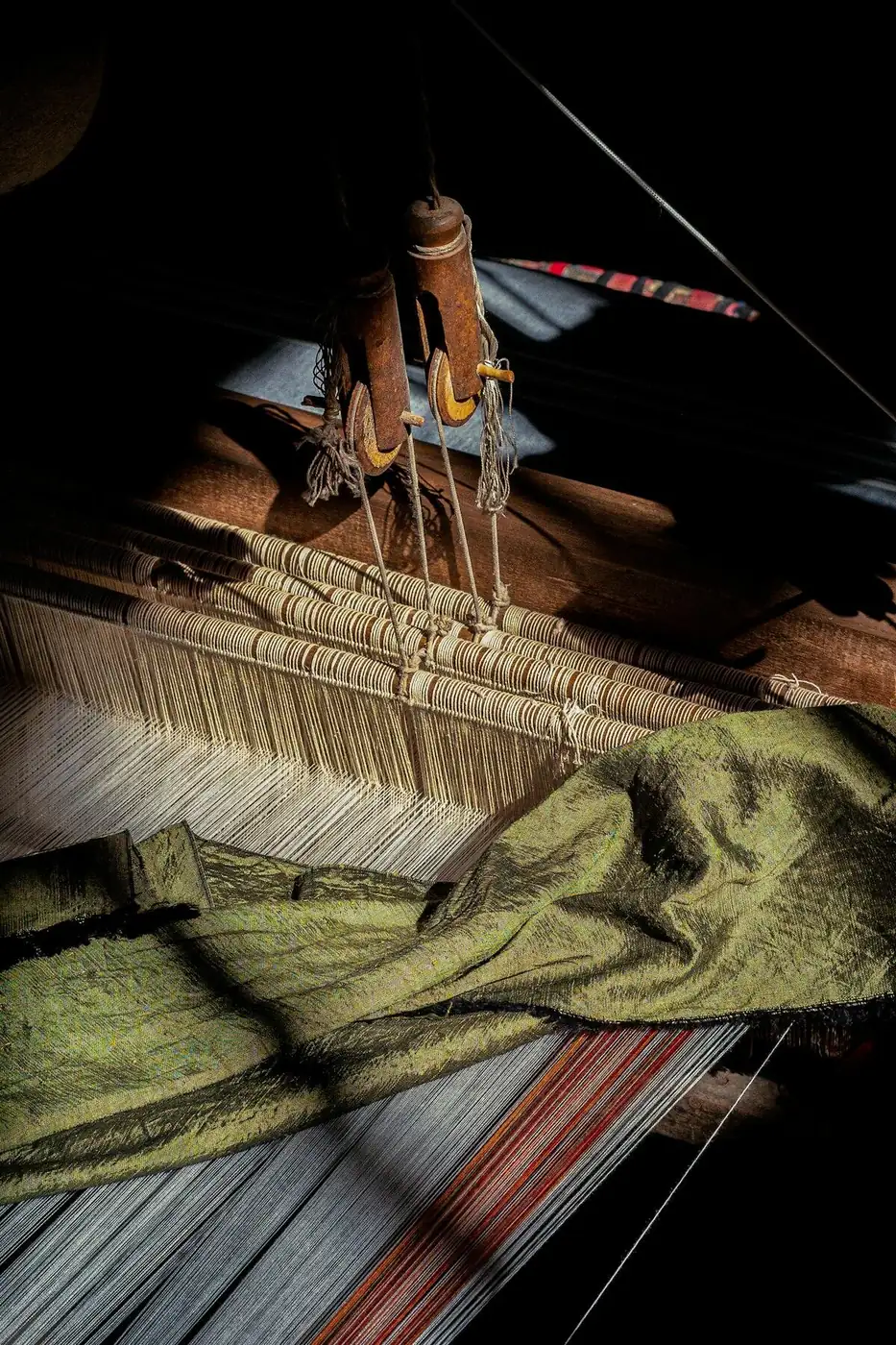
Every piece passes through the same hands, the same valley, the same techniques that made this cloth a court textile long before it was a category on a website. We didn't invent that lineage. We're the generation choosing to carry it forward, for the people who wear the cloth, and for the artisans whose work depends on someone still asking for it done properly.
The circle is three ateliers, not one, and each does a different thing: Zaina Kadal carries the needlework, sozni, tilla, because that's where the embroiderers are. Rainawari carries the plain-loom pieces. Nowhatta carries kani, which takes one weaver the better part of a year and is the reason we only ever have a single kani piece in the collection at a time. More of the catalogue sits with Zaina Kadal because more of what we make is embroidered, not because we stopped looking elsewhere.
What you're really buying
An heirloom, not a purchase
A synthetic wrap sold as "pashmina-style" gets worn a season, then thrown out. That's what a purchase is. A hand-spun one gets mended instead, which is what makes it an heirloom rather than a purchase. It doesn't wear out. It softens. And it carries an actual answer when someone asks where it came from, which atelier, which hands, how many hours, which valley the wool grew in.
We don't apologize for making that case. We publish the sourcing, the hours, the artisans' names where they've agreed to be named, not as marketing, but because someone paying this much for cloth is owed the arithmetic behind the price. Most of the market would rather you didn't ask.