Sozni Embroidery, Explained
Fine hand needlework, traditionally worked from the reverse of the cloth so no knot ever shows on the front.
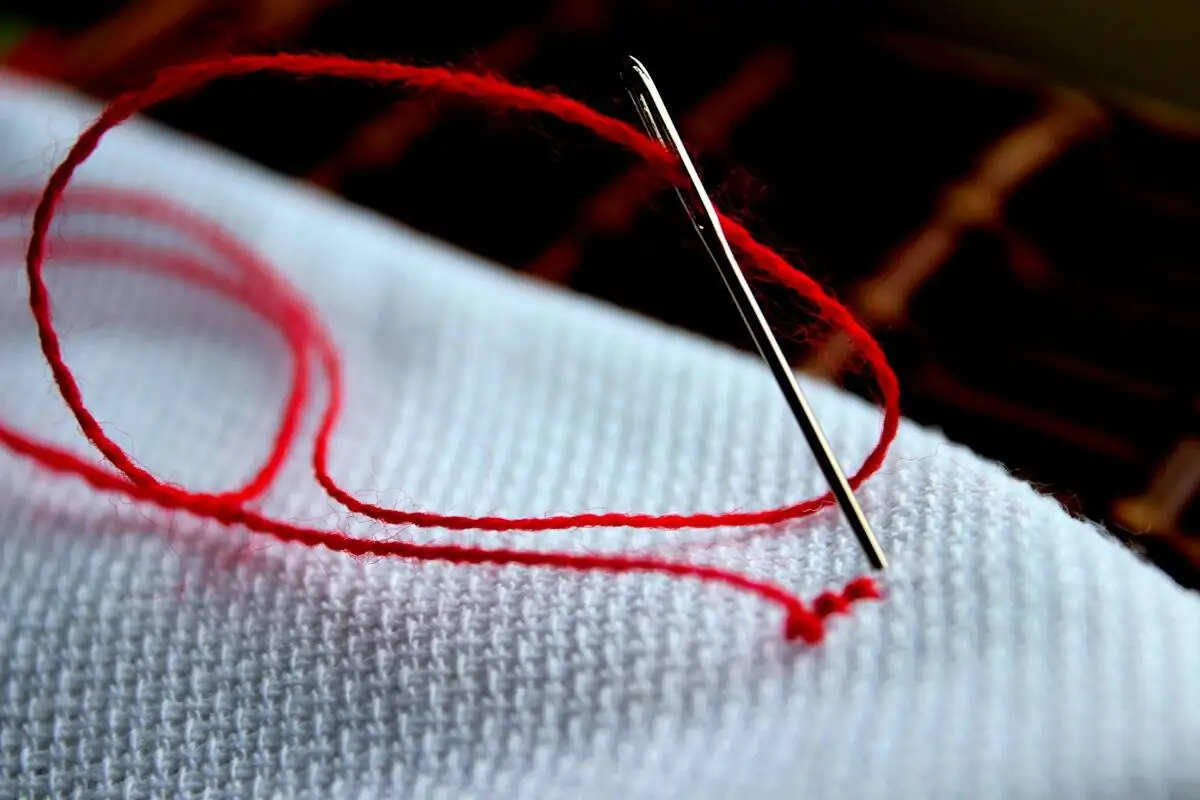
Sozni is fine hand embroidery worked, traditionally, from the reverse side of the cloth rather than the front, so that no knot ever shows on the finished face of the piece. It's needle-drawn thread, not a hook technique like ari, which reads bolder but faster and is worked from the front instead. Sozni is the slower, finer of the two, and historically the technique kept for a household's finest pieces.
Our own sozni work is done at Zaina Kadal Atelier. A single piece can carry 200 or more hours of sozni needlework depending on density, worked in the border only, at medium coverage, or across the full cloth.
Sozni is one of five techniques in the site's own vocabulary, alongside plain hand-spinning, tilla metallic thread, kani weaving, and ari embroidery, each suited to a different kind of piece. Sozni tends to carry the most restrained, detailed work: a wrap silhouette embroidered only at the cuff, for instance, rather than across the whole cloth, which is a deliberate choice, not a cost-cutting one, from a house that could embroider the full piece and sometimes does.
See sozni pieces in the shop, or read how the boteh motif, often worked in sozni, got its Western name.
Browse the Lucr pashmina collection, read the GI pashmina explainer, or see the full Pashmina Guide.