What Is Pashmina? Fibre, Origin and Meaning
Pashmina is the fine undercoat of the Changthangi goat, hand-spun and handwoven in Kashmir. What the word means, where the fibre comes from, and how it differs from wool and cashmere.
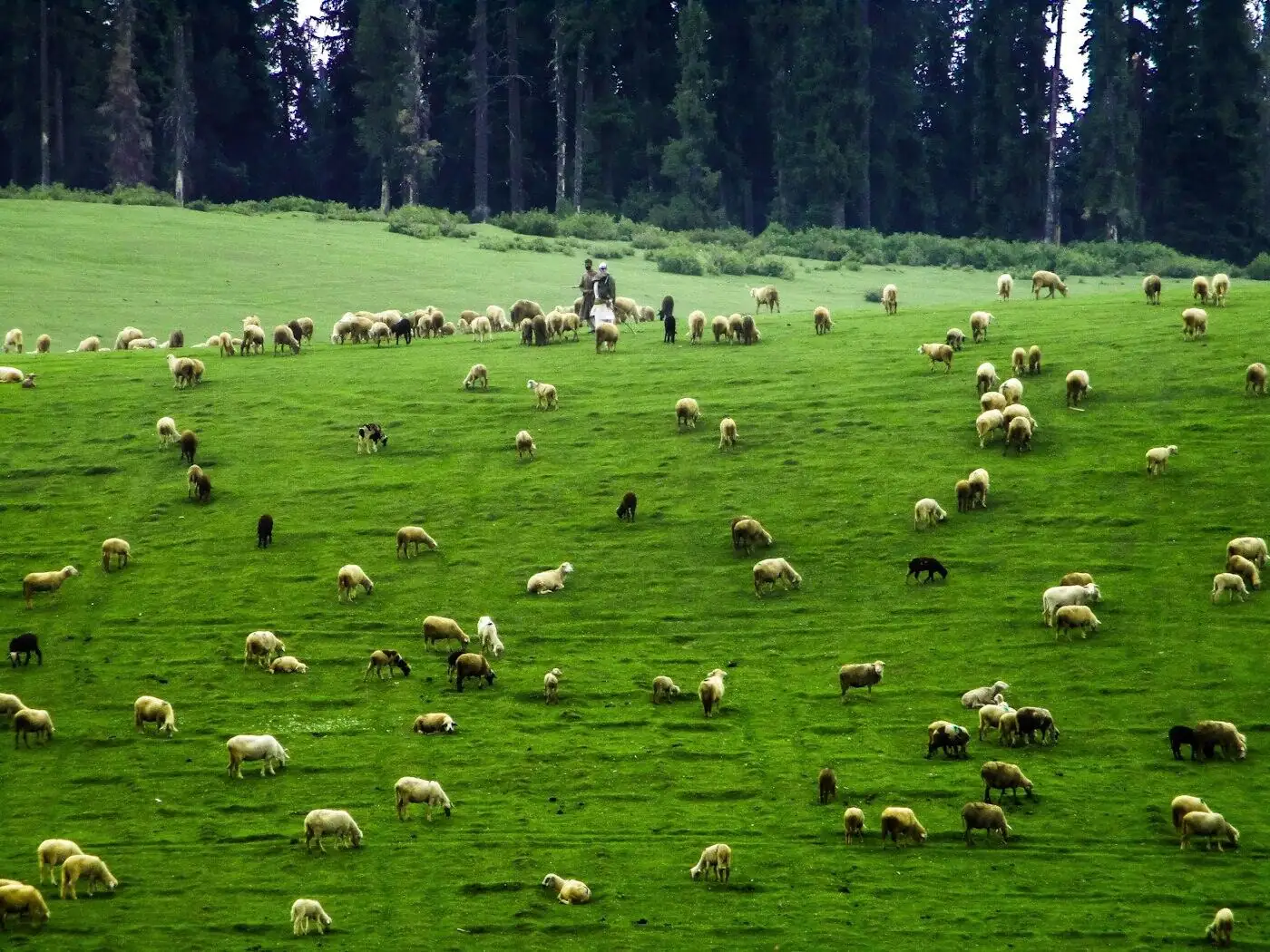
Pashmina is the fine, soft undercoat of the Changthangi goat, combed by hand each spring and then hand-spun and handwoven in Kashmir into shawls, stoles and cloth. The word comes from the Persian pashm, meaning wool. A genuine pashmina fibre is roughly 12 to 15 microns across, finer than most cashmere and far finer than sheep's wool.
Where pashmina comes from
The goats live on the Changthang plateau in Ladakh, at around 4,000 metres or more, where winters fall far below freezing. To survive, they grow a dense undercoat beneath their coarse outer hair. In spring the herders comb that undercoat out by hand. The raw fibre then travels to Kashmir, where it is cleaned, hand-spun on a spinning wheel (the yinder) and woven on a hand loom.
Pashmina vs wool vs cashmere
- Wool usually means sheep's wool, typically 18 to 40 microns: warmer per gram than cotton, but coarser and often itchy.
- Cashmere is a broad trade term for fine goat undercoat from several breeds and countries, usually machine-spun.
- Pashmina, in its proper sense, is the narrow end of that category: Changthangi fibre, hand-processed in Kashmir. The full comparison is here.
Why "pashmina" on a label doesn't prove much
Outside India the word is often used loosely for any soft scarf, including viscose and acrylic blends. Kashmir pashmina carries a Geographical Indication, so a GI label is stronger evidence than the word alone. Our guide to telling real pashmina from fake covers the checks you can do yourself.
Is pashmina warm?
Yes, for its weight. Because the fibres are so fine, a pashmina shawl traps a lot of air while staying light, so a piece weighing a couple of hundred grams can be worn from autumn through winter. A plain stole is light enough to wear on cool summer evenings.
Every Lucr piece states its fibre, its technique and the atelier that made it. See what real pashmina should cost before you buy anywhere.
Browse the Lucr pashmina collection, read the GI pashmina explainer, or see the full Pashmina Guide.